
Why Building and Pest Reports Matter When Buying a Property in Victoria

Before you sign anything, it’s worth knowing exactly what you’re buying. Our Senior Conveyancer, Carolyn Martin, shares her practical advice on why a building and pest inspection can protect you from costly surprises.
Buying a property is one of the most exciting milestones, but it’s also one of the biggest financial risks most people will take. In competitive markets, emotions can run high and decisions are often made quickly.
To strengthen their offer, some buyers skip building and pest inspections, hoping it will make their offer more appealing to sellers and agents.
While this can improve your chances in the short term, it also increases the risk of costly surprises after settlement. What looks like a straightforward purchase on the surface can hide issues that aren’t visible during a brief inspection.
This article breaks down why building and pest inspections matter, what can go wrong if you skip them, and how to protect yourself without putting your purchase at unnecessary risk.
What is a building and pest report, and why does it matter
A building and pest report is a professional assessment of a property’s condition. It typically covers:
Structural elements (like foundations, walls, and roofing)
Identifies defects or maintenance issues
Checks for pest activity, such as termites
Flags potential safety concerns
In simple terms, it tells you what you can’t easily see.
This isn’t just a “nice to have” - it’s a form of risk management. Without it, you’re relying on surface impressions and limited inspections, which can leave you exposed to unexpected costs.
There’s also growing public and political conversation around housing quality and buyer protections, highlighting how common hidden issues can be.
Ultimately, you’re not just buying a home - you’re taking on any problems that come with it. A report helps you understand exactly what that means, both financially and emotionally, before you commit.
What can go wrong without one
Skipping a building and pest inspection can leave buyers exposed to issues that aren’t obvious during an open home.
For example, structural defects like cracked foundations or roof movement may only become clear after settlement, when repair costs fall entirely on you.
Termite damage is another common surprise, often hidden behind walls or under floors, and can be expensive to treat and repair.
Water-related problems can also go unnoticed, such as:
Poor drainage
Lack of proper water-proofing
Rising damp
Leaks that only appear after heavy rain
In some cases, buyers discover non-compliant works - like unapproved extensions or DIY electrical and plumbing - creating safety concerns and potential legal headaches.
The impact isn’t just financial. These issues can cause ongoing stress, delays, and disruption, especially if the property isn’t immediately livable.
Without making the contract subject to a building and pest report, your ability to seek compensation or exit the contract is extremely limited. What seemed like a straightforward purchase can quickly turn into a costly and frustrating experience.
If you’re looking at a property and aren’t sure which risks to consider, we can help you review the contract before you sign.
Start your conveyancing process online here.
How to protect yourself
The safest way to manage risk is to make your offer or contract subject to a building and pest report.
For most contracts, this means checking the boxes in the contract that allow you to arrange inspections after signing, and gives you the option to withdraw if a major defect (in a building report) or a major pest infestation (in a pest report) is identified or to try to renegotiate the price.
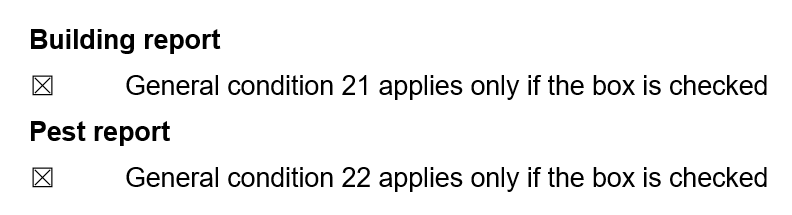
It provides a way out without penalty if a current major defect or major pest infestation is found, as long as you obtain a compliant report by a qualified professional and act within the agreed timeframe.
Qualified Professionals for a Building Report (per September 2025 version of General Condition 21)
Registered building surveyor
Registered building inspector
Registered domestic building
Architect
The standard timeframe is 14 days under the contract, but can be shortened if varied by a vendor’s special condition - so you’ll need to organise inspections quickly (usually via the real estate agent) and review the results before the deadline.
If problems are found, you can walk away or use the report to try to negotiate repairs at the vendor’s expense or a reduced purchase price.
Crucially, the conditions must be added to the contract before you sign and cannot be used when buying at auction.
If you sign a contract at private sale without it being subject to a building and pest inspection, your ability to exit the ontract if a major defect is discovered is very limited.
Taking this step ensures you’re not just securing a property, but also protecting your financial position and peace of mind.
Why some buyers skip it, and why that can be risky
In a hot property market, some buyers skip a building and pest inspection to stay competitive. Agents may hint that cleaner, faster offers are more appealing, creating pressure to waive conditions.
There’s also the fear that making the contract subject to building and pest could cost them the property altogether. It can feel like a necessary compromise to “win.”
If this resonates, consider arranging a building and pest inspection before signing, rather than making the contract subject to those inspections. There are many qualified professionals who can carry out a building and pest inspection on an urgent basis, allowing you to move quickly without compromising on due diligence. If the report is satisfactory, you can proceed with confidence and make an unconditional offer.
Proceeding without a building and pest inspection may feel like a short-term win, but it carries long-term risk. Skipping this step might secure the deal, but it leaves open the risk of hidden structural issues, pest damage, or costly repairs surfacing later. It can also mean you lose bargaining power over the purchase price if you're not fully informed about the true condition of the property before making an unconditional offer.
The real goal isn’t just winning the property - it’s buying well, with confidence and a clear understanding of what you’re investing in.
Before you sign anything, it’s also worth having a legal expert review the contract and talk through your options.
Start your conveyancing process here.
What’s changing in Victoria
There’s growing momentum in Victoria to shift how building and pest inspections are handled.
At the time of publishing this blog, the state government has proposed a system where vendors provide inspection reports upfront, making them available to all buyers before a property is sold.
If implemented, this would likely be introduced through legislation around 2027 and aims to reduce costs and improve transparency for buyers.
This shift reflects just how important these reports have become in the buying process.
However, it doesn’t remove the need for buyers to stay informed and conduct their own due diligence. Concerns have already been raised about potential bias or inconsistent quality in vendor-provided reports.
Even as the system evolves, the key takeaway remains the same: buyers need to understand the risks, ask questions, and make a fully informed decision before committing.
Buying a property is a big step. Getting the right advice early can make all the difference.
We’ll review your contract, explain your options clearly, and help you move forward with confidence.